
Winter Sowing

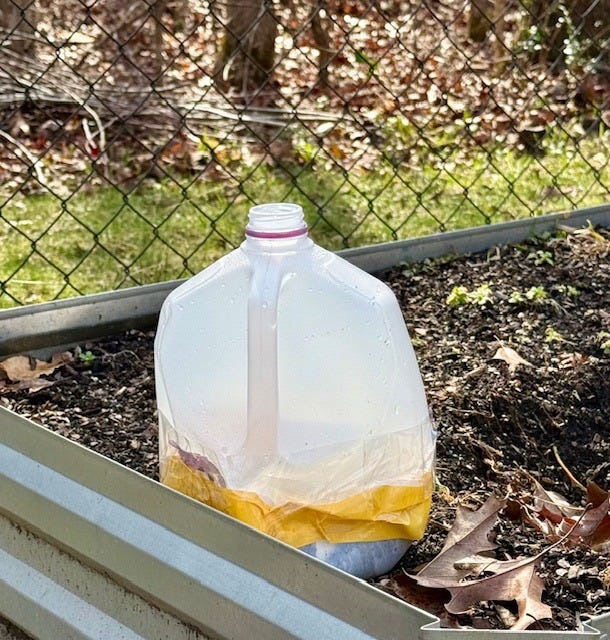
This week, our local Master Gardeners kicked off the Lunch and Learn season with a workshop on winter sowing. Whenever our group gets together, it is always fun; but I especially enjoy a hands-on event where I get to take something home.
Winter sowing is a pretty easy and inexpensive way to start certain types of seeds outdoors. The plants that do best are those that like the cold, so be sure to check the types that will work well in your area. Some need to be cold for 30 days, some need more time. For plants needing 30 days, this is a great time to plant in my area (Zone 8a). Read the back of your seed packet for important information.
This method means that you can start plants early but leave them outside, even if it is still very cold or maybe snowing where you live. The milk jugs serve almost as a mini greenhouse, without any fuss. Plus, you don’t need to take up your indoor counterspace and any grow lights you may be using.
First, I took a milk jug that had been rinsed out well, and had holes cut in the bottom. I cut around the jug under the handle, almost but not completely around, then filled the bottom with 3 inches of fresh soil. I scattered purple coneflower seeds on the top, then covered them lightly with just a bit more soil. I watered the seeds just enough for them to be damp, then taped the top and bottom of the milk jug together. Be sure to label the jug with the type of seeds you have planted; I can guarantee that a few weeks from now I otherwise won’t remember what was inside. I then removed the plastic cap and placed the jug in one of our empty raised beds. And that is it!
They should be happy outside in the weather, getting plenty of sunshine; rain will go in through the open cap, and any excess will drain out through the bottom. Once germination happens and daytime temperatures consistently get above 50 degrees Fahrenheit, you can open the containers during the daytime. Just be sure to close them back up at night. Once the seedlings have several sets of leaves, you can take them out of the jug and plant them.
I love a science experiment! Hopefully, my seeds will grow; and I will look forward to lots of purple coneflowers for my pollinator garden.
Want to learn more? Check out specifics from the Farmer's Almanac. And good luck!